


Rwanda is a well-known tourism and digital development country in East Africa. It has clean cities, rich cultural and tourism resources, and a high proportion of young population. Smartphone penetration continues to rise. Local outdoor travel and tourism demand stable mobile power consumption, while public charging infrastructure is scarce, giving Rwanda shared power bank a strong blue ocean development opportunity. To achieve stable and sustainable profitability, it is necessary to adapt to the local African ecosystem and build a dedicated Rwanda shared power bank localization solution to avoid regulatory and operational barriers.
1. Core Technology Breakthrough and Localization Deployment
Rwanda has clear compliance standards for imported electronic products and a diversified multi-language and payment system. Therefore, technology localization is the key to successful deployment of Rwanda shared power bank projects, requiring full adaptation in hardware, software, language, payment, and compliance.
In terms of language adaptation, Rwanda’s official languages include Kinyarwanda, English, French, and Swahili, covering both local residents and tourists from neighboring countries. Rental interfaces, mini-programs, user APPs, and backend systems of Rwanda shared power banks must support multi-language switching, adapt to local UI habits, reduce usage barriers, and improve user experience.
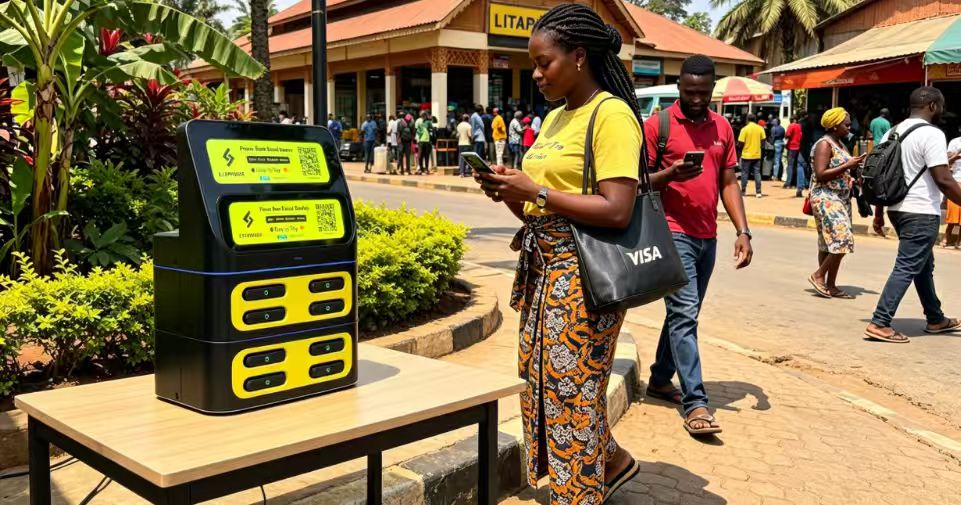
Shared power bank device deployed in a local shop in Rwanda under customized cooperation with Zhongdian Hexin
For payment systems, Rwanda’s consumer market relies on cash (Rwandan Franc), bank cards, cross-border e-wallets, and UnionPay channels. Offline and online small-payment scenarios are widely integrated. The system must support local currency pricing and connect to mainstream payment gateways to enable self-service rental, automatic billing, and one-click return, fully adapting to local consumption habits and increasing transaction volume of Rwanda shared power banks.
In terms of hardware compliance, Rwanda is regulated by RURA for imported electronic devices. Equipment must comply with 230V voltage standards and pass electrical safety and battery explosion-proof certifications. It must also be adapted to Africa’s humid and warm climate with dustproof and moisture-proof design. Compliant hardware ensures smooth customs clearance and stable long-term deployment of Rwanda shared power bank devices.
2. Premium Scenario Selection and Operational Management
.jpg)
1. Deployment Scenarios
How to choose shared power bank deployment locations? Based on Rwanda’s urban development and tourism characteristics, selecting high-traffic and high-demand scenarios is key to maximizing revenue. The main scenarios include:
Urban commercial centers: Kigali CBD, shopping malls, and trendy dining streets with dense foot traffic and young consumers, ideal for large-scale Rwanda shared power bank deployment.
Iconic tourist attractions: Volcanoes National Park, Nyungwe Forest, and Lake Kivu, where tourists stay longer and consume more battery power, making them core profit scenarios.
Transportation and leisure hubs: Kigali International Airport, transport terminals, hotels, homestays, and entertainment venues, continuously generating stable income for Rwanda shared power bank operations.
2. Operational Management
High-quality locations combined with refined operations are essential to maximize profitability. Zhongdian Hexin shared power bank factory provides customized hardware and software solutions with an independent management backend, helping partners quickly deploy projects from branding to system setup and remote management.
The dedicated intelligent backend allows operators to monitor device status, daily revenue, and order details in real time, and remotely troubleshoot faults without frequent on-site maintenance, significantly reducing operational costs.
Based on backend data, operators can analyze rental frequency and user behavior, optimize device placement and pricing strategies, and continuously improve the performance of Rwanda shared power bank operations.

 Company and Product Information Download
.jpg)

.jpg)

.jpg)
.jpg)
.jpg)


