


The shared power bank sector in Europe continues to develop, and the UK stands out as a promising market with strong consumer spending power. Existing rental locations are concentrated in major cities such as London, while secondary cities and town-center commercial districts still have significant gaps in service availability. Supported by substantial tourism and business travel, the UK market offers attractive opportunities for investment and expansion.
.png)
1. UK Shared Power Bank Market Analysis and Strategies
Why is the UK suitable for deploying shared power banks across tourism, transportation, and commercial consumption scenarios?
Key advantages of the UK shared power bank market:
Advantage 1: Stable international tourism demand — The UK received 40.8 million international visitors in 2025, generating £29.8 billion in visitor spending (UK Office for National Statistics, ONS, 2025). In 2026, business travel and cultural tourism continue to maintain steady growth. Tourist attractions, museums, shopping streets, and exhibition venues in London, Edinburgh, and Manchester attract large numbers of visitors. Tourists rely heavily on their phones for navigation, photography, and online communication during extended trips, resulting in rapid battery consumption and consistent demand for rental charging services.
Advantage 2: High mobile internet penetration — At the end of 2025, the UK had approximately 68.1 million internet users, representing a penetration rate of 97.8%, and around 99.3 million mobile connections. Smartphones are deeply integrated into everyday life, creating temporary charging needs across dining, shopping, transportation, and entertainment scenarios.
Advantage 3: Mature bank card and mobile payment systems — In 2025, bank card payments accounted for 64% of all payment transactions in the UK, while contactless payments represented approximately 39%. Around 65% of adults were registered users of at least one mobile wallet. Shared power bank stations can prioritize support for bank cards, NFC, Apple Pay, Google Pay, and QR code payments to make the rental process easier for users.
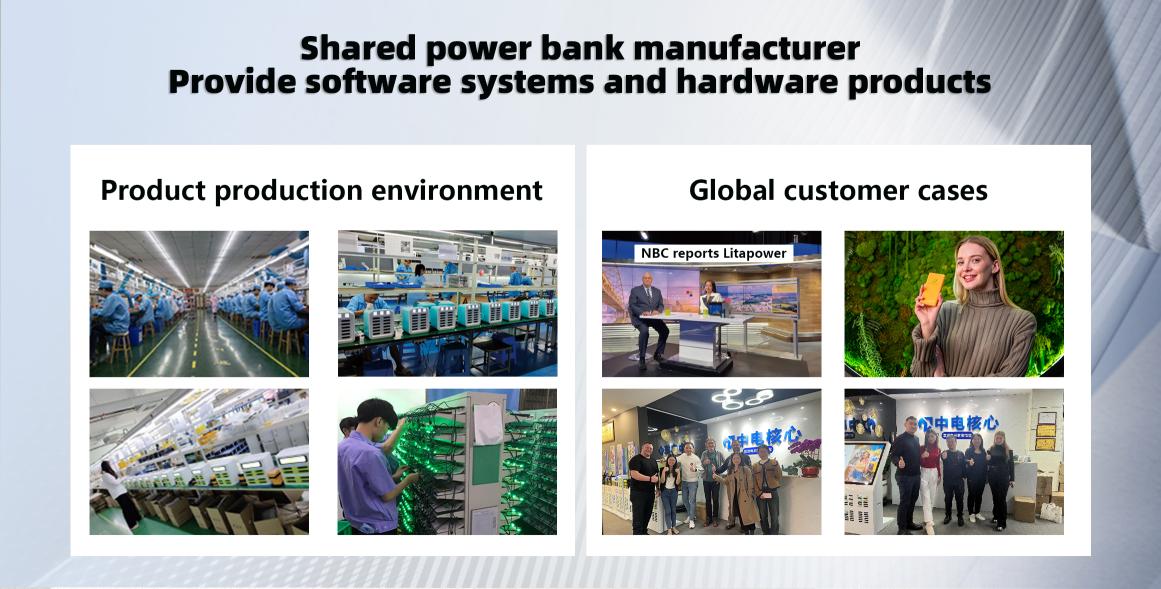
Many local entrepreneurs and investors in the UK can leverage Chinese supply chains to import equipment through shared power bank OEM private-label customization services and develop the market under their own local brands. Litapower, a brand under Zhongdian Hexin, provides an integrated solution covering software, hardware equipment, and operational support.
2. UK Shared Power Bank Profit Model
Shared power bank stations in the UK can prioritize airports, railway stations, shopping centers, bars, restaurants, hotels, and event venues. Equipment deployment and rental prices should be determined according to visitor traffic and usage patterns, while convenient rental services should be provided in line with local payment habits.
Revenue Models:
(1) Rental Revenue
Adopt hourly or per-rental pricing. During the initial launch phase, introductory offers for first-time users can help attract customers. Prices can then be adjusted dynamically according to local spending levels, rental duration, and equipment utilization rates.
(2) Membership Promotions
Introduce membership discounts, repeat-rental offers, and loyalty point programs to encourage frequent usage, improve equipment turnover, and increase customer retention.
(3) Advertising Revenue
Use station screens and partnerships with local businesses to display brand advertisements, restaurant offers, and event information, creating additional revenue streams beyond rental fees.

 Company and Product Information Download


