


Germany’s shared power bank market benefits from a mature consumer market, a large mobile internet user base, and steadily growing tourism demand. As one of Europe’s major economic and tourism hubs, Germany offers significant commercial opportunities for shared power bank services, supported by its large urban consumer population, tourist traffic, and increasingly digital lifestyles.
_metool.jpg)
1. Germany Shared Power Bank Market Analysis and Strategies
Why is Germany a shared power bank market with long-term growth potential in Europe?
Key advantages of Germany’s shared power bank market:
Advantage 1: Diverse tourism and urban consumption scenarios — Germany recorded 497.5 million overnight stays in 2025, including 83.8 million overnight stays by international visitors (Federal Statistical Office of Germany, 2025). From January to September 2026, overnight stays increased by 0.6% year over year. Shopping malls, airports, railway stations, hotels, restaurants, and entertainment venues in Berlin, Munich, Hamburg, and Frankfurt are all suitable locations for deploying shared power bank stations in Germany.
Advantage 2: Highly developed mobile internet infrastructure — Germany had 78.5 million internet users in 2026, representing an internet penetration rate of 93.5%. The number of mobile connections reached 110 million, equivalent to 131% of the population (DataReportal, 2026 data). Smartphones are widely used for navigation, social networking, transportation, and online shopping, providing a large potential user base for Germany’s shared power bank market.
Advantage 3: Well-established local payment infrastructure — Credit cards, SEPA transfers, and major digital wallets are becoming increasingly widespread in Germany. Physical merchants commonly support contactless payments, while acceptance of QR code payments continues to grow. These payment options can support QR-code-based rentals and automatic billing, enabling unattended shared power bank operations.
In addition, the European Commission forecast in November 2026 that Germany’s GDP would grow by 1.3% in 2026. As the economy gradually recovers, new opportunities are emerging for retail, tourism, and commercial services.
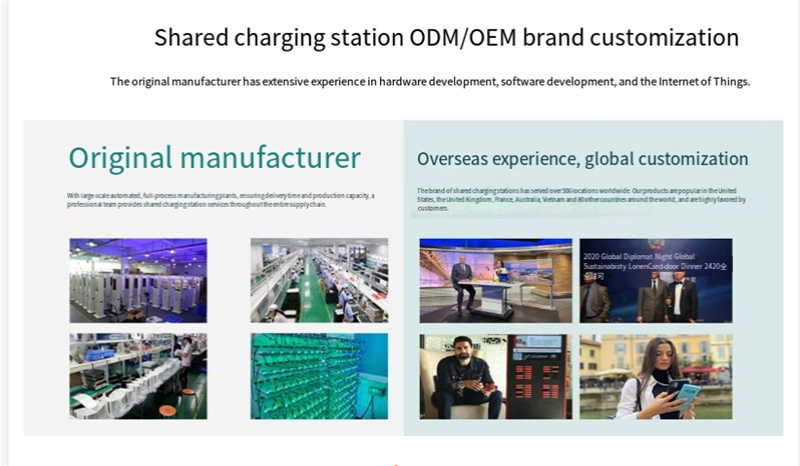
Many local entrepreneurs and investors in Germany can leverage Chinese supply chains and import equipment through OEM private-label customization services, entering the German shared power bank market under their own local brands. Litapower, a brand under Zhongdian Hexin, provides global partners with an integrated solution covering shared power bank software, hardware equipment, and operational support through its established OEM private-label customization services.
2. Germany Shared Power Bank Profit Model
How can you operate a shared power bank business in Germany?
Market operations should prioritize airports, railway stations, shopping malls, hotels, restaurants, and exhibition venues. Brand awareness can be increased through social media marketing, merchant partnerships, and promotional events. Rental prices should be adjusted according to local purchasing power and specific usage scenarios in different cities, while backend data analysis can help optimize equipment deployment. Companies entering the German market should also pay close attention to compliance requirements, including CE marking, WEEE, battery regulations, and GDPR.
Revenue Models:
(1) Rental Revenue
Adopt hourly or daily rental pricing, with rates adjusted according to location and usage duration. Offer a free first-use experience during the initial launch phase to attract users.
(2) Membership Promotions
Introduce monthly memberships, rental discount coupons, and long-term rental offers to increase repeat usage.
(3) Advertising Revenue
Generate additional income for Germany’s shared power bank projects through advertising on station screens, in-app advertising placements, and promotional partnerships with local businesses.
 Company and Product Information Download


