


Italy's shared power bank market is worth watching, with key opportunities concentrated in international tourism, urban commercial activity, and mobile payment scenarios. Existing rental locations are largely concentrated in major tourist cities such as Rome and Milan, while coverage remains limited in second-tier towns and lesser-known tourist attractions. This leaves considerable growth potential in Italy's shared power bank market.

I. Italy Shared Power Bank Market Analysis and Strategy
Why is Italy a suitable market for developing shared power bank services by leveraging tourist traffic and contactless payments?
Advantages of Italy's shared power bank market:
Advantage 1: Strong international tourist traffic — In 2026, visitor traffic to art exhibitions, historic cities, and coastal holiday destinations continues to grow steadily. Popular areas such as Rome, Florence, Venice, and Naples attract large numbers of visitors to tourist attractions, art museums, and historic city-center streets. Tourists spend long periods exploring these destinations and rely on their phones for navigation, photography, online ticket purchases, and communication. This quickly drains battery power and creates consistent demand for rental charging services.
Advantage 2: Widespread mobile internet coverage — According to DataReportal, Italy had approximately 53.1 million internet users at the end of 2025, representing an internet penetration rate of 89.9%, with around 67.7 million mobile connections. Residents and tourists increasingly rely on smartphones for travel, social networking, and online shopping, providing a solid user base for shared power bank services.
Advantage 3: Widespread adoption of contactless payments — According to the Bank of Italy, contactless payments accounted for 93% of in-person POS transactions in the first half of 2026, while payments made through mobile devices represented 30% of in-store transactions. Shared power bank stations can prioritize support for bank cards, NFC, Apple Pay, and Google Pay, while retaining QR code rental options to accommodate both local residents and international visitors.
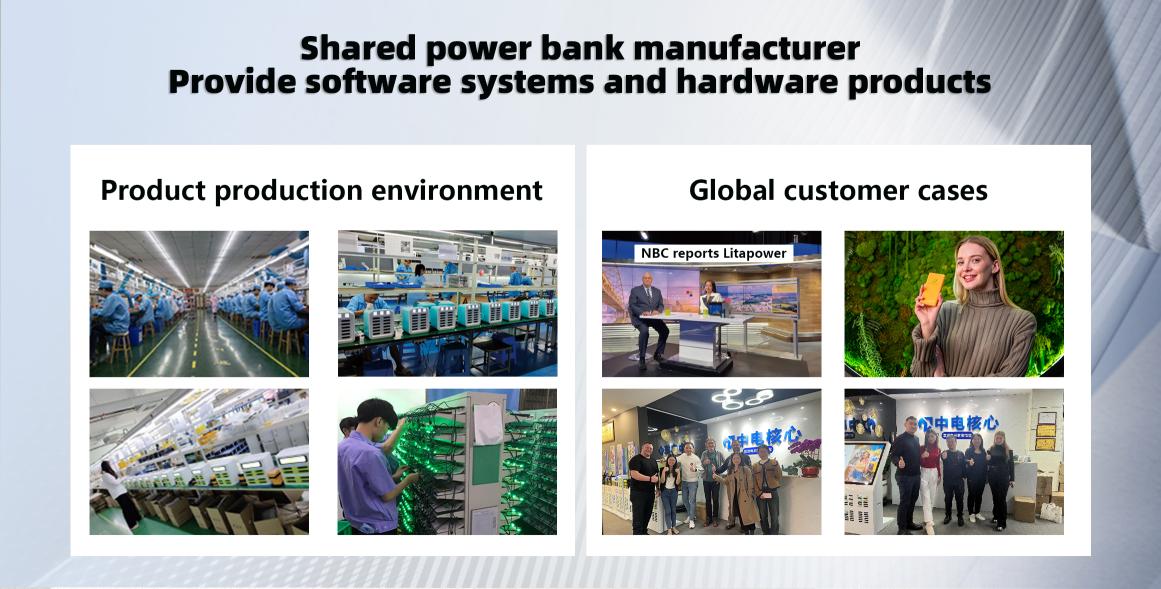
Many local entrepreneurs and investors in Italy can leverage Chinese supply chains to import equipment through OEM private-label customization and develop the Italian shared power bank market under their own local brands. Litapower, a brand under Zhongdian Hexin, draws on its established OEM and private-label customization services to provide global partners with an integrated solution covering shared power bank software, hardware equipment, and operational support.
II. Shared Power Bank Profit Models in Italy
Shared power bank operators can prioritize tourist cities such as Rome, Milan, Venice, and Florence, selecting locations including airports, railway stations, areas near tourist attractions, shopping centers, hotels, and restaurants. Operators can begin with a small-scale location trial and gradually expand based on visitor traffic and equipment utilization rates.
Revenue models:
(1) Rental income
Adopt hourly or per-rental pricing. During the initial stage, offer discounts on first-time rentals to attract users. Prices can then be adjusted dynamically according to peak and off-peak seasons and visitor traffic at each location, helping improve equipment utilization.
(2) Membership promotions
Introduce membership discounts, loyalty point rewards, and repeat-rental offers to encourage tourists and local residents to use the service again and improve customer retention.
(3) Advertising revenue
Display advertisements for hotels, restaurants, tourism activities, and local businesses on device screens, creating additional revenue streams beyond rental income.

 Company and Product Information Download


