


Africa's shared power bank industry is experiencing rapid growth, and Kenya is emerging as a highly promising blue ocean market in East Africa. Supported by its tourism resources, high mobile internet penetration, and well-developed local mobile payment ecosystem, Kenya offers an attractive opportunity for businesses looking to enter the shared power bank market.
_metool.jpg)
一、Kenya Shared Power Bank Market Analysis and Strategies
Key Advantages of the Kenya Shared Power Bank Market:
Advantage 1 | Continued Growth in the Tourism Market — In 2025, Kenya welcomed 2.5506 million international visitors, representing a year-on-year increase of 6.2%. Visitors to national parks and wildlife reserves reached 3.9545 million (Kenya National Bureau of Statistics, 2026). Tourist attractions, hotels, and commercial establishments in cities such as Nairobi, Nakuru, Naivasha, and Mombasa offer potential demand for power bank rental services.
Advantage 2 | Expanding Mobile Internet Infrastructure — At the beginning of 2025, Kenya had 27.4 million internet users and 68.8 million cellular mobile connections (DataReportal, 2025). The widespread use of smartphones for navigation, social media, online entertainment, and mobile work creates ongoing usage scenarios for shared power bank services.
Advantage 3 | A Well-Developed Mobile Payment Ecosystem — According to the Central Bank of Kenya, registered mobile money accounts reached 89.46 million in December 2025, while the number of mobile money agents reached 473,536 (CBK, 2025). Mobile payment services represented by M-PESA provide a solid foundation for QR-code-based power bank rentals, online payments, and unattended operations.
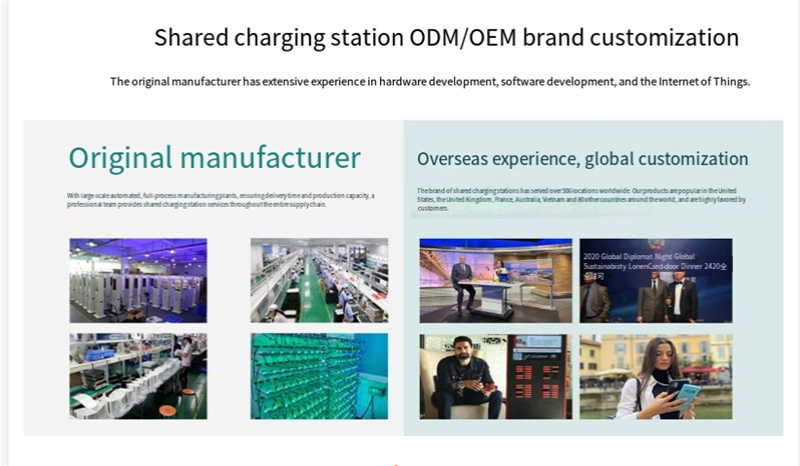
Zhongdian Hexin offers comprehensive in-house manufacturing capabilities and independently developed software systems, supporting independent deployment and source code delivery. Its products are exported to more than 100 countries and regions, and it has served over 600 brands worldwide. The company provides OEM and private-label customization services, shared power bank software, and hardware solutions for Kenya's shared power bank projects, helping partners establish their own branded businesses in the local market.
二、Kenya Shared Power Bank Business and Profitability Plan
For shared power bank projects in Kenya, cities such as Nakuru, Kisumu, and Naivasha are worth prioritizing. In Nakuru, potential deployment locations include Westside Mall and the central city's restaurant and commercial districts. In Kisumu, operators can consider West End Mall, restaurants, and leisure venues around Lake Victoria. In Naivasha, opportunities include hotels, resorts, and cafés near Hell's Gate National Park. These locations combine tourism, commercial activity, and local consumer demand, making them suitable for differentiated deployment strategies by shared power bank brands in Kenya.
In terms of team operations, it is advisable to establish partnerships with local Kenyan operators who can manage merchant acquisition, equipment maintenance, and brand promotion. Market awareness can be developed through Facebook, TikTok, influencer marketing, and offline advertising. By integrating M-PESA payments and implementing appropriate rental pricing, membership programs, and advertising partnerships, operators can use backend analytics to monitor device utilization, orders, and revenue, continuously optimizing deployment locations and operational strategies.
For investors looking to enter the East African market, Kenya offers a solid foundation for shared power bank development through its tourism traffic, mobile payment infrastructure, and diverse commercial scenarios. By selecting suitable cities and establishing effective local partnerships, businesses have the opportunity to gradually build a stable shared power bank operating network.

 Company and Product Information Download


