


The U.S. shared power bank market continues to grow rapidly, driven by strong user demand and diverse usage scenarios, making it an expanding service industry. The country has a mature commercial consumption system, widespread smartphone usage, and a wide variety of tourism and entertainment activities. Consumers need to use their phones continuously for navigation, social media, and payments while on the go, creating real market demand for shared power banks in the United States.
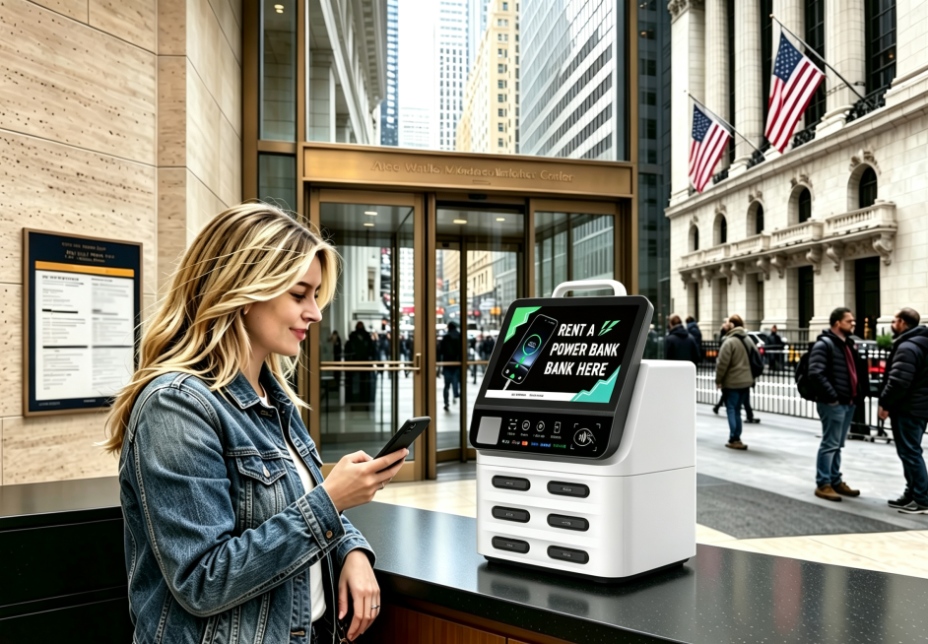
I. U.S. Shared Power Bank Market Analysis and Strategy
Shared power banks in the United States offer diverse commercial applications. Credit cards, debit cards, and contactless payment methods such as Apple Pay and Google Pay make renting devices convenient for users. Operators can prioritize locations with high foot traffic and longer customer dwell times. Revenue per location can be high, with rental prices reaching US$1–3 per hour and strong user acceptance.
Key Factors for Profitability in the U.S. Shared Power Bank Market
Software and hardware solutions: Equipment should be adapted to local U.S. usage habits and support NFC tap-to-rent and deposit-free rental models. Charging cabinets should be durable and reliable, while the software backend should monitor device status and order transactions in real time.
Brand promotion: Increase brand awareness for shared power banks in the United States by using popular social media platforms among young consumers for targeted advertising. Promotional methods can include influencer endorsements, video marketing, posters, and brand exposure at sporting events, music festivals, and other activities.
Market strategy: Regularly introduce promotional offers to encourage more young consumers to try shared power bank services. Use backend data analysis to gain deeper insights into user behavior and preferences and develop more targeted marketing strategies.
II. How to Launch a Shared Power Bank Business in the United States: Efficient Implementation Steps
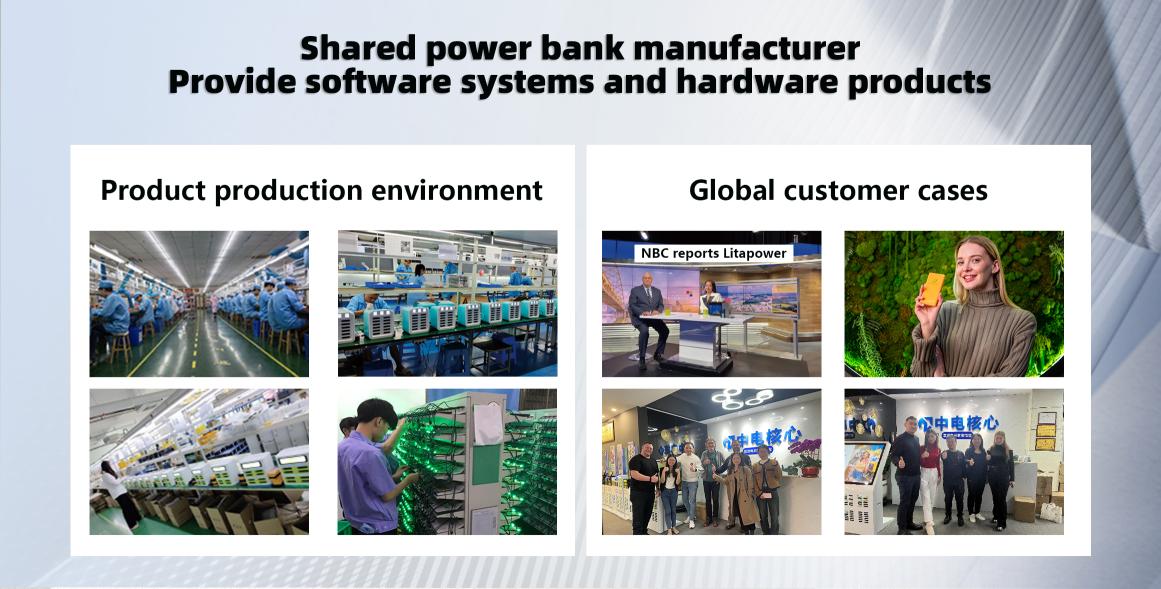
Litapower, the overseas brand of Zhongdian Core shared power bank factory, provides shared power bank software and hardware solutions as well as OEM private-label customization services for the U.S. and other international markets. Its offerings support payment system integration, multilingual interfaces, and software customization. To address the actual needs of overseas customers, Zhongdian Core has established a Five-Chain Service System covering the supply chain, operations chain, compliance chain, service chain, and capital chain, providing partners with end-to-end support from project implementation to ongoing operations and business development.
Launching a shared power bank business in the United States can be divided into four steps:
(1) Choose an ODM manufacturer: Prioritize manufacturers with strong production capabilities, product certifications required for the U.S. market, payment integration capabilities, and mature software systems to reduce project deployment risks.
(2) Select the initial deployment cities: Evaluate commercial districts, shopping malls, bars, hotels, and event venues in cities such as New York, Los Angeles, and Miami. Start with a small-scale pilot and expand deployment based on operational data.
(3) Payment integration and localized UI: Depending on the equipment solution, integrate bank card payments such as Visa and Mastercard, as well as mobile wallets such as Apple Pay and Google Pay. Use English as the primary language for the rental interface and add other languages according to the target customer groups.
(4) Backend management and operations: After the equipment goes live, continuously evaluate rental frequency per device, revenue, failure rates, and location performance. Adjust equipment placement, rental prices, and promotional strategies in a timely manner to gradually improve the operational efficiency of the shared power bank project in the United States.
 Company and Product Information Download
.jpg)

.jpg)

.jpg)
.jpg)
.jpg)


