


As one of the most highly digitalized countries in the Nordic region, Denmark has a smartphone penetration rate of over 94%, an extremely high level of cashless payment adoption, strong consumer willingness to pay, and high acceptance of the sharing economy. Denmark also has a thriving tourism industry, with stable visitor traffic in major city attractions and commercial districts throughout the year. As demand for outdoor charging continues to increase, the Danish shared power bank market has relatively low competitive pressure and low coverage, making it a high-value investment opportunity in Europe.
.png)
I. How to Build a Shared Power Bank Business in Denmark?
In Denmark, shared power banks can be deployed around tourists, young consumers, and people who use smartphones frequently. Denmark has a high level of digital payment adoption. In 2025, more than 90% of offline payments were made digitally, while the use of digital wallets such as Apple Pay and Google Pay continued to grow. Among annual bank card transactions, 31.6% were completed through digital wallets. Danish shared power bank services can therefore integrate with local mobile payment methods while also supporting international payments and card payments for tourists and commercial scenarios.
Market Target Analysis:
Danish shared power bank services can target young users and tourists by providing convenient rentals, fast-charging power banks, and multiple payment methods. Operators can introduce deposit-free rentals, 22.5W fast charging, multi-channel payments, holiday promotions, and dynamic pricing mechanisms. Combined with refined operations, these measures can quickly improve user retention and rental conversion rates. In urban areas, priority can be given to cafés, bars, nightclubs, commercial districts, transportation hubs, and tourist attractions, with continuous customer acquisition through promotional campaigns and brand marketing.
Key Strategy for Shared Power Banks in Denmark: Market Deployment
(1) Scientific Deployment Planning
Shared power banks are a scale-based profit model, and the number of deployed devices directly determines profit potential and regional coverage. Many projects entering the Danish market fail mainly because of insufficient deployment volume and scattered regional coverage, making it difficult to spread location revenue-sharing costs and operating labor costs. Only by purchasing a sufficient number of devices and achieving dense, grid-based regional coverage can operators quickly establish their brand presence and unlock stable profit potential.
(2) Precise Location Deployment
Work closely with local Danish agents and channel partners to secure high-quality core locations in cities. Priority should be given to transportation hubs, central commercial districts, tourist attractions, chain bars, nightclubs, and popular restaurants in major tourism cities such as Copenhagen. These high-traffic, long-dwell-time scenarios have strong charging dependence and stable repeat rental rates.
(3) Full-Scale Brand Promotion
Brand awareness is key to entering the Danish market. Exposure for your Danish shared power bank brand can be increased through local influencer endorsements, short-video content, and offline poster advertising. At the same time, major events such as music festivals, sports competitions, and outdoor exhibitions can be used to integrate brand advertising, rapidly improve brand credibility and local market penetration, and continuously drive rental order growth.
II. How Can a Shared Power Bank Project in Denmark Generate Revenue?
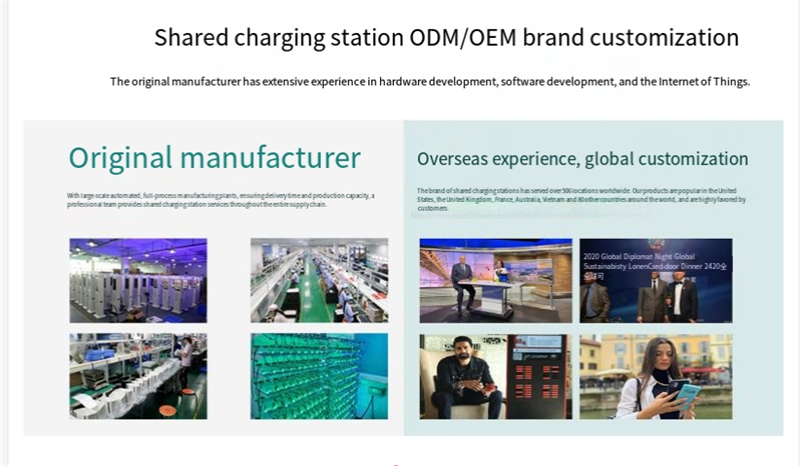
Litapower, the overseas brand under Zhongdian Core’s shared power bank factory, has extensive experience in the European market. It provides partners with shared power bank OEM and private-label customization, software and hardware solutions, pricing standards, and operations management training, helping them quickly build their own Danish shared power bank brand market.
Backend Management System: Real-time access to equipment status, order revenue, user data, and operational conditions, with analysis and adjustments based on actual data.
After-Sales Guidance: Provides operational support covering pricing, profit models, advertising, membership campaigns, and other areas to expand diversified revenue models.
OEM and Private-Label Customization: Supports customization of the brand, equipment appearance, and software interface, providing a turnkey solution without third-party revenue sharing.
Based on the actual needs of overseas customers, the company has developed a “Five-Chain Service System” covering the Supply Chain, Operations Chain, Compliance Chain, Service Chain, and Capital Chain, providing partners with comprehensive support throughout the entire process from project implementation to operational development.

 Company and Product Information Download
.jpg)

.jpg)

.jpg)
.jpg)
.jpg)


