


As one of Europe’s highly digitalized countries, the Netherlands has a well-developed mobile payment system, mature commercial and tourism scenarios, and a high level of acceptance of shared rental services. At the same time, the Dutch shared power bank market currently has no dominant leading brand, with moderate location coverage, relatively mild market competition, and stable rental returns. This makes the Netherlands an attractive blue-ocean market for companies expanding into Europe’s shared charging sector.
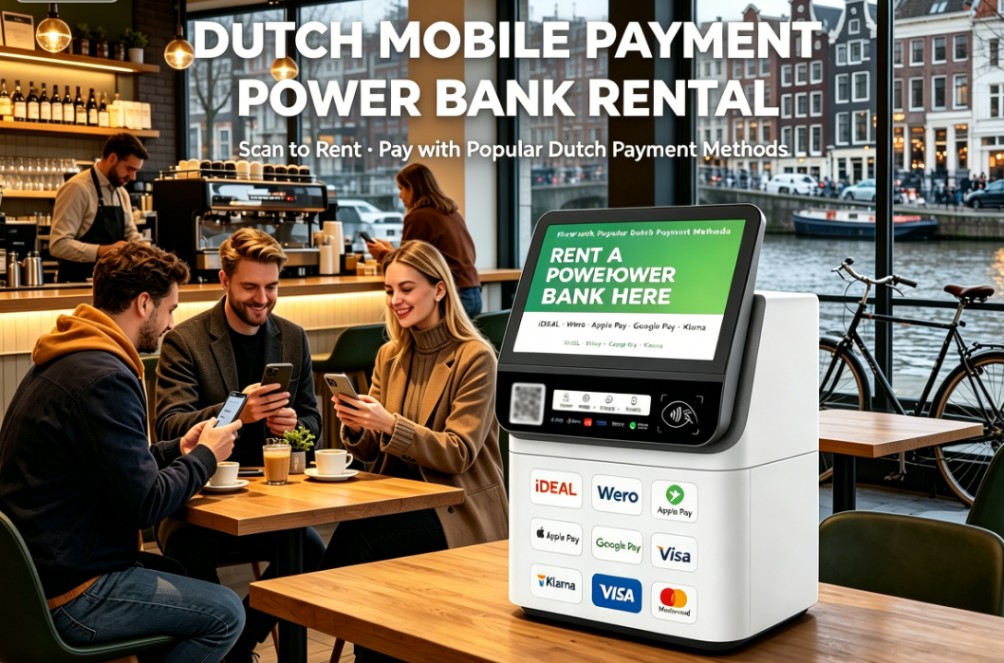
I. What Are the Advantages of the Dutch Shared Power Bank Market?
The Netherlands has concentrated tourism, commercial, and urban consumption scenarios. Cities such as Amsterdam, Rotterdam, and The Hague have numerous hotels, shopping malls, restaurants, entertainment venues, and public transportation locations. The number of international tourists continues to grow, while users rely heavily on smartphones for navigation, photography, ticket purchases, mobile payments, and social communication, creating stable demand for instant charging through shared power banks.
For operators, the Dutch shared power bank business is well suited to a “high traffic + long dwell time” model. Devices can be deployed at airports, train stations, shopping malls, hotels, restaurants, cafés, bars, tourist attractions, and entertainment venues. Additional revenue streams can be developed through reasonable pricing, advertising, membership programs, and other operating methods.
II. How to Build a Shared Power Bank Business in the Netherlands? Case Analysis
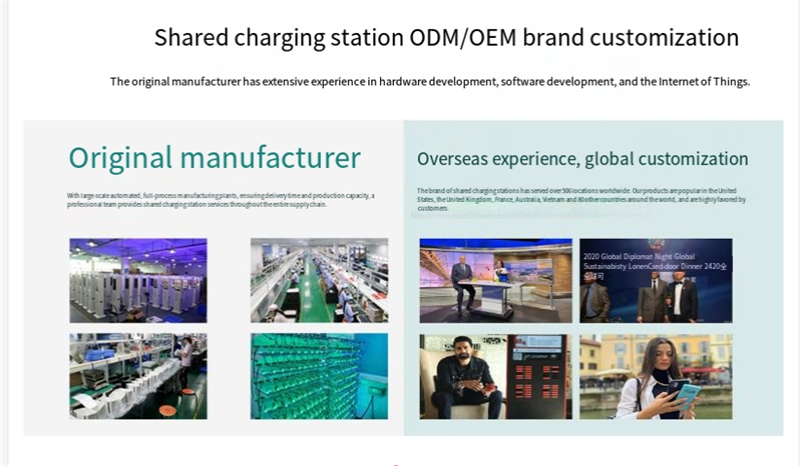
Finding a reliable partner is an important condition for the rapid implementation of a shared power bank project in the Netherlands. Litapower, the overseas shared power bank brand under Zhongdian Core, provides overseas partners with shared power bank OEM and private-label customization, software and hardware solutions, payment integration, pricing standards, and operations management training, helping partners build their own local brands.
-
Deployment scale: At the initial stage, the number of devices should be planned according to the size of the team and its operational capabilities. Increasing the deployment scale can expand regional coverage, improve device utilization, and increase the overall profit potential.
-
Mainstream markets: Prioritize airports, train stations, large shopping malls, commercial streets, and other mainstream markets. High-quality locations can help improve brand credibility. At the same time, operators can cooperate with Dutch local brands, merchants, and venue owners to expand the market through their local resources.
-
Strong local team: Having a local team, channel resources, or local partners can reduce the difficulty of project implementation. During operations, it is also necessary to manage equipment, analyze data, conduct marketing and promotion, and optimize locations. Operating strategies should be continuously adjusted according to traffic and consumption patterns in different areas.
For companies looking to enter the Dutch shared power bank market, localized payment, high-quality locations, sufficient equipment coverage, and refined operations are important foundations for sustainable project development.
 Company and Product Information Download
.jpg)

.jpg)

.jpg)
.jpg)
.jpg)


