


The United States is one of the world’s strongest consumer markets, with high rental prices, strict experience requirements, and significant potential for shared power bank businesses. Unlike China’s highly price-competitive market, shared power bank rentals in the United States can achieve higher rental prices, strong user acceptance, and high willingness to pay. For shared power bank operators, the country’s consumer spending power, mature digital payment infrastructure, and diverse commercial environments provide significant profit potential.
I. How to Launch a Shared Power Bank Business in the United States?
(1) Market Compliance — Key Requirements
When entering the U.S. market, the first step is to pay attention to compliance requirements related to charging equipment, batteries, wireless communications, data privacy, and payments. Certification and regulatory requirements may vary depending on the equipment configuration and specific application. It is recommended to consult relevant regulatory authorities in the target market or engage a local professional compliance consulting company for an assessment. Of course, working with a reliable Chinese shared power bank manufacturer can reduce communication costs related to initial certification, supply chains, and cross-border shipments.
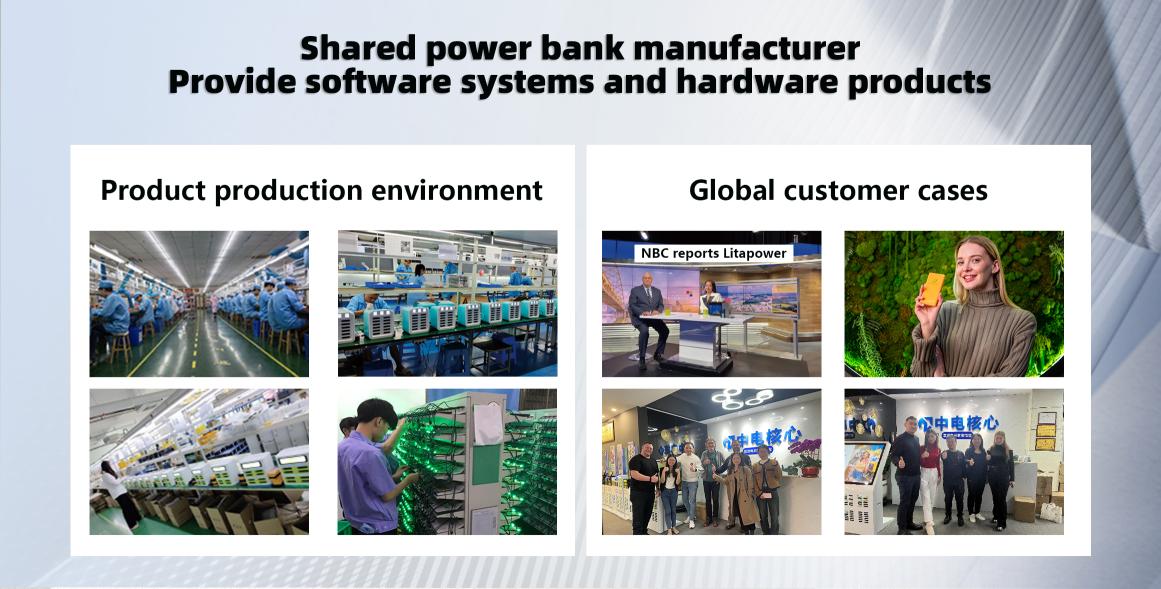
Recommended manufacturer: Zhongdian Core’s shared power bank factory has its own production lines and can match product configurations and certification documents according to the requirements of different markets, including Europe, Southeast Asia, the Middle East, and the United States. Its products have obtained multiple certifications, including CE, FCC, and 3C, and corresponding compliance support can be provided according to specific projects, helping customers complete cross-border shipments more efficiently.
(2) Localized Deployment — Hardware and Software Solutions
Hardware equipment:
-
Battery specifications: Shared power bank operators in the United States can choose 8,000mAh shared power banks for different scenarios, or 10,000mAh semi-solid-state fast-charging power banks to meet different battery-life and fast-charging requirements.
-
Power supply: The standard voltage commonly used in the United States is 120V, so a power adapter solution that complies with local electrical standards should be configured.
-
OEM customization: Logo, cabinet appearance, power bank appearance, UI interface, and other branding elements can be customized to create a dedicated shared power bank brand.
-
Device functions: Cabinets with screens can be selected for advertising and product promotion. Anti-theft structures, device status monitoring, and other functions can also be configured according to different scenarios such as airports, shopping malls, hotels, and entertainment venues.
Software customization:
-
Multilingual system: English and other languages can be configured according to the needs of target users and the local operations team.
-
Payment integration: The system supports bank cards, NFC, QR codes, and other payment methods, and can connect with suitable payment systems for the U.S. market.
-
Backend system: Operators can view device status, orders, rental data, and revenue in real time, and use backend data analysis to adjust device deployment and operational strategies.
Zhongdian Core’s shared power bank factory has its own production lines and independently developed software systems. It supports independent deployment and source code delivery, providing customers with shared power bank software and hardware solutions as well as OEM/private-label customization services. Whether for the domestic market or overseas markets such as Europe, Southeast Asia, the Middle East, and the United States, localized development can be carried out according to project requirements.
II. How to Operate and Expand the Market? Overseas Case Study
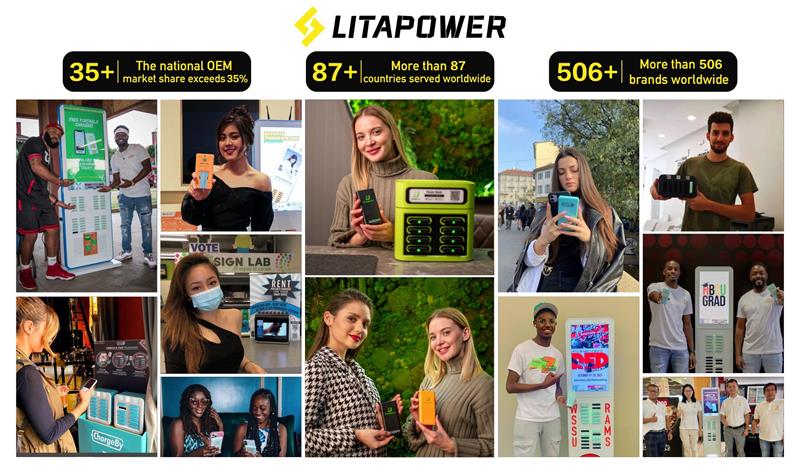
After establishing your own company and team, you need to combine local resources and venue partnerships to select high-quality locations for deployment. The overseas brand SXXX expanded its market coverage through social media accounts, poster advertising, multi-scenario deployment, and local partnerships. The project achieved payback in approximately three months and gradually established its own brand influence, entering the local shared power bank market and generating stable returns.
(1) Equipment Deployment
Priority should be given to high-value locations such as shopping malls, tourist attractions, and airports. These locations have stable customer traffic and high brand exposure, which helps establish brand credibility. At the same time, operators can also enter consumption scenarios where users stay longer, such as bars, nightclubs, cafés, and restaurants.
(2) Brand Promotion
Building brand exposure is an important part of opening up the U.S. market. Promotion can be carried out through local influencers, social media, short videos, posters, and outdoor advertising. Brands can also be promoted in high-exposure locations such as stadiums, airports, commercial centers, and large outdoor events, gradually turning users’ “need to charge” into awareness and recognition of the brand.
(3) Management and Operations
During operations, reasonable pricing strategies should be developed based on local spending levels, venue traffic, and competitive conditions. At the same time, diversified revenue models such as membership programs and advertising revenue can be established. By continuously monitoring order volume, rental frequency, equipment utilization, and revenue across different scenarios through the backend system, operators can adjust equipment deployment, pricing plans, and marketing activities based on actual data, improving overall operational efficiency.
 Company and Product Information Download
.jpg)

.jpg)

.jpg)
.jpg)
.jpg)


