


African shared power banks are currently in the stage of market development and business model exploration. As smartphone penetration continues to rise, public charging facilities remain scarce, and users face significant battery anxiety. China’s mature sharing economy model is also providing new business ideas for African investors and companies, making shared power banks in Africa an attractive overseas expansion project with low competition and high return potential.
.png)
I. Market Conditions Across African Regions
-
Kenya:
Kenya has a mature mobile payment infrastructure, with e-wallets such as M-Pesa and Airtel Money widely used. Cities such as Nairobi offer extensive shopping, dining, entertainment, and tourism scenarios, making them suitable for prioritizing shared power bank deployment. -
Egypt:
Egypt has a large population and numerous commercial and tourism scenarios, including Cairo and the Red Sea tourist areas. Payment methods such as Vodafone Cash and Fawry provide convenience for the localized operation of shared power banks. -
Tanzania and Nigeria:
Tanzania has significant development potential in tourism, dining, and entertainment, while mobile payment services such as M-Pesa and Airtel Money are relatively widespread. Nigeria has a large population and a substantial urban consumer market, making it suitable for commercial deployment focused on major cities such as Lagos and Abuja.
II. Localized Deployment of Shared Power Banks in Africa
-
Payment Integration
Local payments: M-Pesa, Airtel Money, MTN MoMo, Vodafone Cash, Fawry, and others; international payments: Visa, Mastercard, Apple Pay, and Google Pay. The equipment supports QR code, NFC, and POS card payments.
-
Pricing Adjustment
The domestic Chinese model typically charges RMB 1.5–3 per hour, with a daily maximum of RMB 15. The African model should be adapted to local purchasing power, with hourly rates of 100–300 shillings, Egyptian pounds, or naira. Tiered pricing can balance affordability with profit margins.
-
Branding Solutions
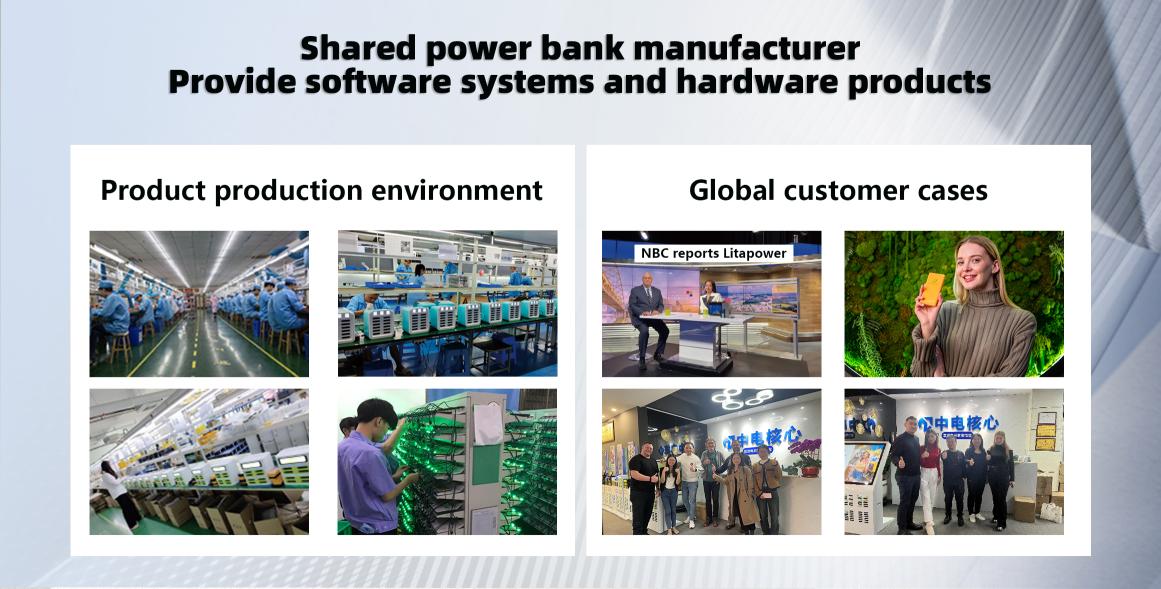
Customize a localized brand and establish an independent revenue and operational system while continuously expanding market coverage through additional equipment deployment. Litapower, the overseas shared power bank brand under Zhongdian Core, has already entered multiple overseas markets, providing partners with OEM private-label customization, software and hardware, and shared power bank solutions to help build their own dedicated brands.
 Company and Product Information Download
.jpg)

.jpg)

.jpg)
.jpg)
.jpg)


